After you submit an application, the employer may invite you for an interview. From the employer’s perspective, the purpose of the interview is to determine your qualifications and your interest in the internship or job. For you, it’s an opportunity to demonstrate that you can do the job and that you want to work in this role and at this organization, and to learn more about whether the position is the right fit for you.
Interviewing is a skill. As with any skill, you can improve your abilities through preparation and practice.
- Learn about the interview process. Find the best ways to prepare. Understand what you should expect from an interview and how to follow up.
- Practice sample interview questions. Take a look at the different types of interview questions shared in this section. How would you respond to them?
- Use CCE Resources. Career counselors can help you prepare for your interviews and practice questions. We have additional resources to help you develop your interviewing skills.
- Follow up after the interview to say thank you.
The Interviewing Process
Interviews can range from a brief phone screening to an in-person superday lasting several hours. The interview landscape continues to evolve, and each organization will have its own unique interview process. Some employers may have multiple rounds of interviews while others have only one. Different employers will use varying interview formats. All that said, it is helpful to be aware of the most common interview formats.
Types of Interviews
In the first round of interviews, the employer will want to confirm your key qualifications and your interest in the role. This may happen through a phone or virtual interview, which is easier for the organization. Employers may use virtual pre-screening tools such as Hirevue to assess candidates. Some employers participate in on-campus interviews to meet selected candidates.
In a subsequent round (or rounds), you may meet with more people including the hiring manager, members of the team, organization leaders, and HR representatives. You may meet with people individually or in groups. Check out more details on what to expect from second round interviews.
Before Your Interview
Regardless of the interview format, you can prepare by researching, reflecting, and practicing:
- Research: Carefully research the employer and the position. Be prepared to show genuine interest in the organization and a thorough understanding of the role.
- Reflect: Review the job or internship description and think about what would be important to do this job well. Reflect on how your experiences have shaped your interest and how they can help you succeed. What skills and motivation do you bring to the role?
- Practice: Use the sample questions in the next section to practice your answers.
After Your Interview
After the interview, send a thank you email to everyone you met. Reflect on your performance: consider what went well and what you could improve for next time. If you don’t hear back after the reply date the employer indicated, you can follow up once by reaching out to the interviewer or HR representative to inquire about the status of your candidacy and the hiring timeline.
Lastly, review this checklist on things to do before, during, and after your interview.
Sample Interview Questions
Below are some sample interview questions that you may encounter.
Traditional Interview Questions
These questions focus on general information that you can answer directly. Some questions will be based on your application, so be prepared to answer questions about your experiences. Check out counselor tips on how to answer common interview questions.
- Tell me about yourself.
- Why are you interested in this position?
- What do you know about our organization? What excites you about our work?
- Why did you choose to major in [your major]?
- Tell me about your work with [activity/internship/job].
- Why are you interested in a career in [this field]?
- What are your strengths? What are your weaknesses?
- Why are you a good candidate for this position?
Behavioral Interview Questions
These questions are based on the premise that past behavior predicts future performance. To prepare to answer these questions, identify the skills that the employer values by reviewing the job description. Frequently, these are skills in leadership, problem-solving, communication, teamwork, and time management. Think of examples in your past experiences where you demonstrated these skills. You can draw upon your coursework, internships, volunteer work, activities, and jobs.
- Describe a time you led a project or initiative.
- Tell me about a time you made a difficult or unpopular decision. What was your process and what did you learn?
- Tell me about a time when you had to manage competing priorities or tight deadlines. How did you stay organized?
- Tell me about a time when you worked as part of a team. What role did you play?
- Describe a time when you had to resolve a conflict. How did you navigate it and what was the outcome?
- Tell me about a time when you worked on a project or made a decision where you didn’t have complete information. How did you move the project forward?
- Tell me about a time you failed to meet expectations. How did you handle it and what would you do differently?
See more examples of behavioral questions and how to respond using the SARA model (Situation, Action, Result, Application).
Hypothetical Interview Questions
These questions predict how you might handle a situation or approach a problem you are likely to face in the position. Try to recall similar situations you may have faced in the past to provide a concrete response for how you would act in this scenario. If you haven’t experienced anything similar, try to envision yourself in that role and determine how you might react. As with behavioral questions, review the job description to ascertain what issues you might face in this position.
- In this role, we often encounter [scenario]. What would you do in this situation?
Industry-Specific Interview Questions
These questions focus on your ability to do this particular job and test your knowledge or understanding of a specific area of an industry. These types of questions are common in fields like engineering, tech, science, and finance. Review guidance on preparing for a software or technical interview and practice answering sample technical interview questions.
Case Interviews
Analyzing business cases is part of the process of interviewing for consulting positions. Case interviews test your ability to analyze a business problem and develop solutions. These interactive processes will require you to ask your own questions as you clarify the question. Take a look at general guidance on preparing for case interviews.
You can also explore Management Consulted, a premium resource provided to you at no cost through CCE. Management Consulted is an industry leader in consulting career prep, case interview practice, and relevant skill building.
Illegal Interview Questions
Questions which relate to your age, race, national origin, citizenship, gender, religion, marital status, sexual orientation, and other information protected by law are not permitted. Check out examples of illegal interview questions and how to respond to them should you encounter them.
Questions to Ask Your Interviewer
The interview is also an opportunity for you to ask questions to gain a better understanding of the employer and the position. You can prepare questions in advance of the interview and also ask questions that arise naturally as part of your conversation.
CCE Resources
We encourage you to take advantage of CCE resources as you prepare for your interview.
- Schedule a practice interview with a career counselor. A career counselor can discuss what to expect from the interview and help you practice your responses to potential questions.
- Big Interview is an online platform that can help you practice for interviews on your own time. You can select interview questions by industry, role, and more, and then record yourself answering questions.
- The Practice Interview Program takes place at the beginning of each semester. Participants will have a virtual practice interview with a Columbia alum and receive feedback.
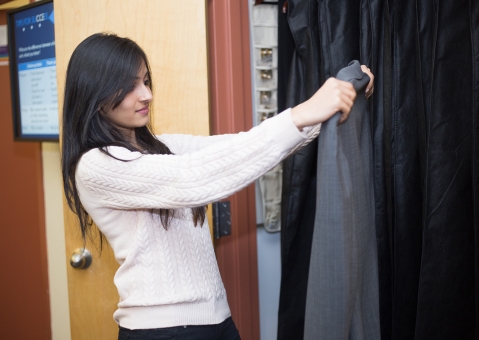
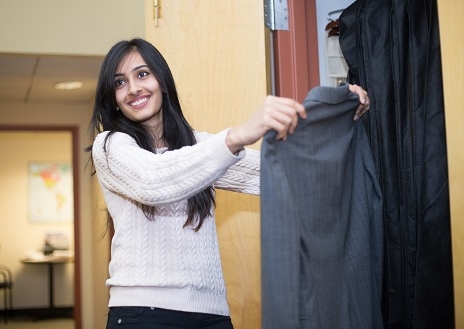
- CCE’s Clothing Closet allows currently enrolled undergraduate students to borrow professional clothing for interviews (or other career-related events) free of charge. Submit a request form to visit CCE and pick out a suit.
- Request an Interview Room at CCE to have a quiet place for your virtual or phone interview. Currently enrolled undergraduates may reserve a room for one hour on weekdays from 9:00 am – 5:00 pm.